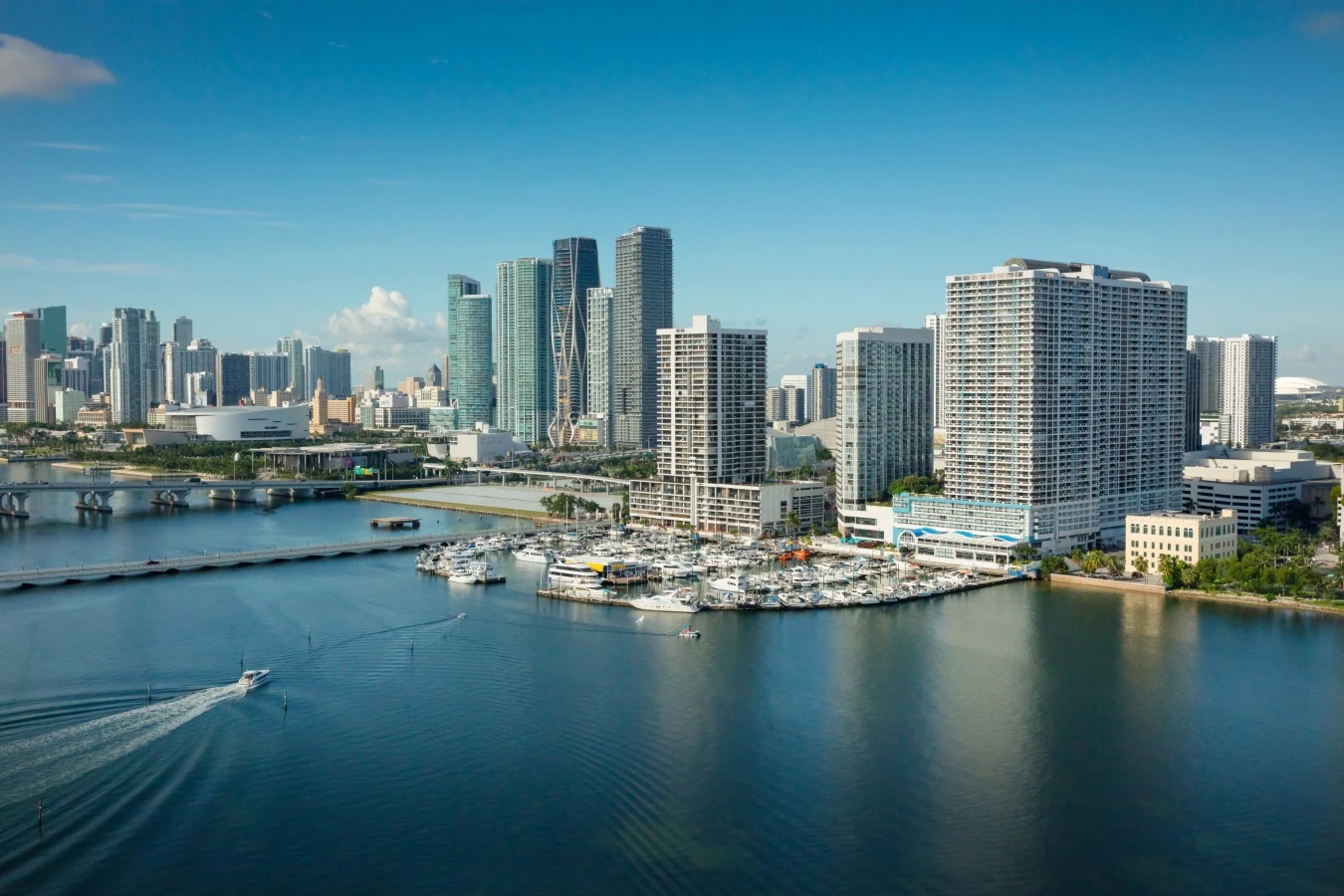
Core Planning Factors for Events at DoubleTree by Hilton Grand Hotel Biscayne Bay Miami
Biscayne Bay waterfront positioning within the Edgewater district
Alignment with downtown Miami and Brickell corporate event ecosystem
On-site dining integration through Los Guachitos Steakhouse, Primo’s Italian Restaurant and Bar, and Casablanca on the Bay
Utilization of the documented South Florida supplier network for AV, transportation, and support services
Venue-specific operational protocols and manual-driven service models
District differentiation from Miami Beach and airport-west clusters
Coordination frameworks for exhibitor-appointed contractors and freight scheduling
Biscayne Bay Core Cluster Context for Event Planning
The Downtown, Brickell, and Biscayne Bay Core forms a distinct operational cluster supporting convention hotels and urban meeting environments that prioritize proximity to financial and innovation districts. The DoubleTree by Hilton Grand Hotel Biscayne Bay Miami contributes to this environment through its direct waterfront exposure, enabling programs that benefit from scenic backdrops and convenient routing to Brickell, the Miami Design District, and Midtown Miami. This setting contrasts with the Miami Beach Convention and Collins Corridor, which centers on the 1.4 million square feet of meeting space at the flagship convention facility and its walkable South Beach extensions.
Planners working in the Biscayne Bay cluster frequently coordinate investor-oriented sessions, product introduction sequences, and high-density corporate schedules where the urban bayfront atmosphere reinforces branding and networking objectives. The cluster’s connectivity to Broward County venues allows for smooth overflow programming or multi-venue campaigns that treat South Florida as a single extended market rather than isolated destinations. Official destination resources consistently position these properties as part of a diversified meetings infrastructure that accommodates both standalone events and supporting activations tied to larger trade shows.
Understanding cluster dynamics informs decisions about primary venue selection, attendee movement, and supplementary logistics. Properties like the miami serve particularly well for organizations seeking an alternative to beachfront density while maintaining ready access to the supplier ecosystem that supports the entire region, from employment services to entertainment booking.
Event documentation for this district routinely highlights the need for precise alignment between program goals and venue capabilities, ensuring that Biscayne Bay–specific attributes enhance rather than complicate execution.
Supports investor events and product launches
Tied to Biscayne Bay and urban core programming
Facilitates sponsor activations in metropolitan settings
Enables connected Miami-Dade and Broward strategies
Property Attributes and Operational Profile
The miami is listed in official Miami and Miami Beach destination materials as a conference hotel designed for both relaxation and operational convenience. Its Edgewater location at 1717 N. Bayshore Drive places it directly on the bay, with documented amenities that include multiple on-site restaurants capable of supporting integrated meal functions and networking dinners. These include Los Guachitos Steakhouse, Primo’s Italian Restaurant and Bar, and Casablanca on the Bay, providing planners with immediate culinary options that reduce external coordination layers.
While specific meeting space metrics are confirmed through current venue documentation, the property functions as part of the established roster of Biscayne Bay venues that accommodate corporate and association programs. Its placement within the official Greater Miami Convention and Visitors Bureau resources signals reliability for groups seeking waterfront environments without the scale or routing complexities associated with the primary beachfront convention assets or the airport-west belt.
Operational planning at this hotel follows the same venue-driven principles applied across South Florida conference properties. Coordinators review the property’s event manual for technical specifications, room configurations, and service parameters rather than relying on market-wide generalizations. This approach ensures alignment between program requirements and actual venue capabilities, particularly for events that incorporate exhibition components or interactive sponsor zones.
The hotel’s inclusion in destination marketing listings underscores its role in the regional mix, offering planners a differentiated option that balances accessibility, views, and the ability to leverage the broader supplier network for specialized needs.
Navigating the South Florida Meetings Supplier Ecosystem
The Greater Miami Convention and Visitors Bureau maintains a structured supplier directory that separates categories for audio-visual and film services, caterers, destination management companies, transportation providers, employment services, and entertainment booking. This ecosystem supports properties throughout the Biscayne Bay Core, including the miami, by allowing event teams to assemble the precise vendor mix required for each program without assuming any single venue maintains comprehensive in-house capabilities.
For events at this hotel, the on-site restaurants can anchor certain food and beverage elements while specialized caterers from the approved ecosystem address thematic or scale requirements. Similarly, transportation partners facilitate attendee movement between the Edgewater district, Brickell, the Miami Beach Convention Center, and airport facilities, maintaining schedule integrity across the connected Miami-Dade and Broward market. Audio-visual suppliers ensure consistent technical execution whether the program includes exhibition displays, general sessions, or breakout workshops.
Effective utilization of this network requires early identification of venue-approved partners and clear delineation of responsibilities between the property, the show organizer, and third-party providers. The ecosystem’s breadth enables nuanced solutions tailored to corporate product launches or association conferences that might incorporate both formal presentations and informal bay-view networking.
Documentation from official sources consistently emphasizes collaboration among high-quality suppliers to create cohesive event outcomes, reinforcing the value of structured procurement rather than ad-hoc vendor selection.
Audio-visual and film services category
Dedicated caterers and destination management companies
Transportation and employment services listings
Entertainment booking resources
Integration with venue-specific approvals
Venue-Driven Labor and Service Frameworks
Miami and Broward labor considerations remain strictly venue-specific, guided by individual property manuals, show organizer directives, and applicable exhibitor documentation. The miami operates within this framework, drawing on the region’s mixed supplier ecosystem rather than any blanket labor classification. Official guides for South Florida venues, including convention centers and resort-style conference hotels, underscore the importance of consulting current event paperwork before finalizing staffing plans.
The market supports both house services and qualified outside vendors depending on the particular program and property rules in effect. This reality applies equally to audio-visual installation, exhibit setup, catering execution, and general attendee services. Coordinators treat each event as its own operational environment, ensuring compliance with the DoubleTree by Hilton Grand Hotel Biscayne Bay’s specific protocols while leveraging the documented supplier categories maintained by the Greater Miami Convention and Visitors Bureau.
Such positioning avoids assumptions about union status or unrestricted access, focusing instead on verifiable, manual-driven conditions. This disciplined approach has proven effective across the region’s diverse venue inventory, from the 60,000 Square Foot Grand Ballroom at the Miami Beach Convention Center to smaller corporate setups in Biscayne Bay hotels.
Event teams achieve best results by building labor plans from the ground up for each program, confirming all arrangements directly with the venue and authorized contractors well in advance of move-in.
Logistics Coordination for Edgewater and Biscayne Bay Events
Neighborhood routing, freight timing, and exhibitor-appointed contractor coordination form central elements of successful events in the Biscayne Bay Core. Properties along N. Bayshore Drive, including the miami, require precise scheduling to accommodate urban traffic patterns, loading sequences, and material flow without disrupting ongoing hotel operations or neighboring activities.
Planners reference venue-specific instructions for delivery windows, material handling procedures, and contractor access protocols. The emphasis remains on alignment between show requirements, property limitations, and the capabilities of authorized providers within the South Florida ecosystem. This attention to operational detail distinguishes professional coordination in the district from more generalized approaches used in less constrained locations.
Integration with regional transportation suppliers further supports efficient movement of equipment and personnel, particularly when events at this hotel form part of a larger Miami program that may also utilize the Miami Convention Center, James L. Knight Center, or Broward County facilities. Early mapping of these interdependencies prevents bottlenecks and maintains program momentum from initial setup through final dismantle.
Documentation across official Miami meetings resources consistently highlights these logistical realities as critical success factors, encouraging detailed pre-event planning that accounts for each venue’s unique operational signature.
Exhibitor-appointed contractor protocols
Precise freight delivery scheduling
Neighborhood routing considerations
Venue manual adherence for loading
Integration with regional transportation partners
Strategic Integration with Miami’s Major Convention Assets
The miami functions effectively as a primary venue for targeted corporate programs or as a supporting asset within multi-venue campaigns led by the Miami Beach Convention Center’s nearly 500,000 square feet of exhibit space or the Miami Airport Convention Center’s 172,000 square feet of conference facilities. Its Biscayne Bay location allows smooth extension of programming that begins in larger exhibit halls and continues with executive sessions, hospitality functions, or product demonstrations in a waterfront setting.
Regional spillover strategies frequently incorporate Broward County Convention Center capacity when Miami-Dade inventory reaches saturation, creating a fluid ecosystem where properties like this hotel absorb specialized components of larger trade shows or association conventions. Understanding these relationships enables planners to optimize attendee experience, control costs, and maintain logistical coherence across county lines.
Official resources from the Greater Miami Convention and Visitors Bureau reinforce this interconnected view, positioning the entire South Florida corridor as a single meetings market with differentiated venue clusters. The miami’s role within the Biscayne Bay Core adds a distinctive bayfront dimension that enhances certain program segments while respecting the operational boundaries of each participating property.
Successful integration depends on coordinated timelines, consistent supplier standards, and clear communication among all stakeholders from initial site selection through post-event reporting.
Practical Planning Steps for Bayfront Conference Programs
Preparation for events at the miami begins with thorough review of the property’s current event manual and alignment with the specific requirements outlined by the show organizer or corporate host. This step establishes the foundation for all subsequent decisions regarding space utilization, technical infrastructure, service providers, and labor allocation within the documented South Florida framework.
Next, identification of necessary ecosystem partners from the GMCVB supplier categories ensures that audio-visual, transportation, and ancillary services meet program objectives while complying with venue guidelines. For culinary elements, coordination between on-site options such as Los Guachitos Steakhouse or Primo’s Italian Restaurant and Bar and any specialized caterers creates cohesive attendee experiences that leverage the bay views whenever possible.
Logistics planning addresses freight routing to the Edgewater address, exhibitor-appointed contractor access, and timing that respects both the hotel’s daily operations and broader Biscayne Bay traffic considerations. Regular checkpoints with the venue’s event team maintain alignment as details evolve, while contingency planning accounts for the variable nature of South Florida weather and regional transportation variables.
Final execution benefits from disciplined adherence to established protocols, clear documentation of responsibilities, and post-event evaluation that captures lessons for future programs at this property or complementary venues across the Miami and Broward landscape. This methodical approach consistently delivers results that align with the professional standards expected in one of the nation’s most dynamic meetings markets.
Manual and requirement review
Supplier category mapping
Logistics and contractor scheduling
Ongoing venue communication
Post-event documentation and refinement
Frequently Asked Questions
Q: What is the exact address and contact information for the DoubleTree by Hilton Grand Hotel Biscayne Bay Miami?
The property is located at 1717 N. Bayshore Drive, Miami, FL 33132. The listed phone number is (305) 372-0313. Official destination resources confirm these details along with its positioning in the Edgewater Biscayne Bay area.
Q: What dining and amenity options are documented for this venue?
The hotel offers on-site restaurants including Los Guachitos Steakhouse, Primo’s Italian Restaurant and Bar, and Casablanca on the Bay. These outlets support integrated meal functions and networking within the property’s waterfront environment.
Q: How does this hotel fit into Miami’s broader meetings and exhibition ecosystem?
It operates within the Downtown, Brickell, and Biscayne Bay Core cluster, supporting corporate programs, product launches, and sponsor activations that complement larger facilities such as the Miami Beach Convention Center and Miami Airport Convention Center while drawing on the regional supplier network.
Q: What labor and contractor model applies to events at this property?
All labor and services follow venue-specific manuals, show organizer requirements, and exhibitor documentation. The South Florida market maintains a mixed, supplier-ecosystem approach without blanket rules, requiring direct confirmation with the property for each program.
Q: How should planners approach logistics for Biscayne Bay venues like this one?
Focus on exhibitor-appointed contractor coordination, precise freight timing, neighborhood routing along the bayfront, and strict adherence to the individual venue’s operational manual. Integration with official supplier categories for transportation and related services helps maintain schedule integrity.
Q: Can this venue support exhibition components within larger Miami programs?
Yes, the hotel accommodates exhibition elements, display areas, and interactive sponsor zones as part of corporate or association events. These activities are coordinated according to the property’s specific guidelines and in alignment with regional convention center activity when part of multi-venue campaigns.