Core Planning Elements for South Beach Trade Shows
Venue-specific service platforms at beachfront properties including Fontainebleau and Faena Forum
Neighborhood routing considerations through the South Beach Art Deco district
Mixed supplier ecosystem access for AV, transportation, and catering services
Exhibitor-appointed contractor coordination aligned with individual venue manuals
Regional connectivity treating Miami-Dade and Broward as a single operating territory
Freight timing and loading protocols derived from property-specific event documentation
Positioning South Beach Within Miami's Event Landscape
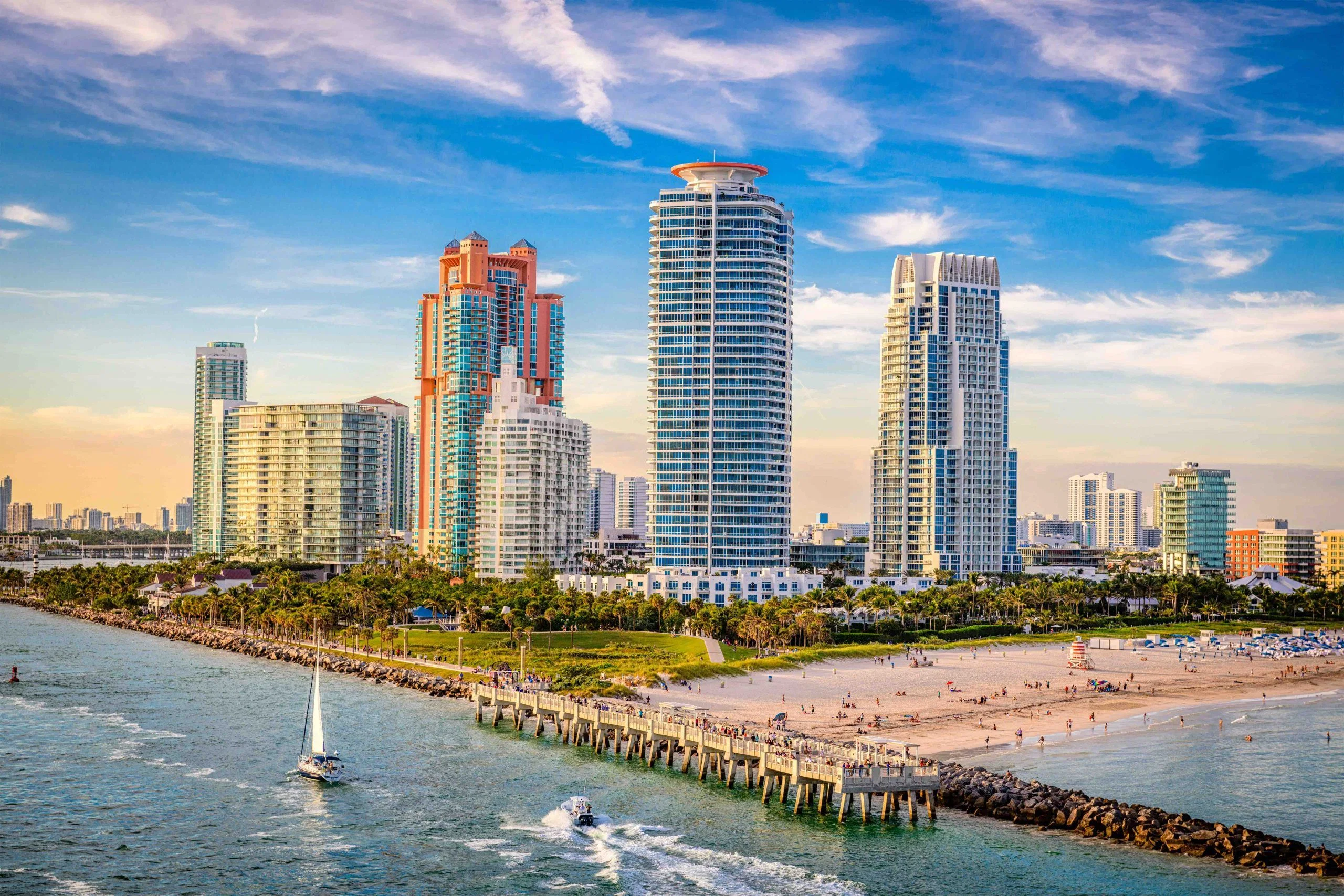
South Beach functions as a high-visibility district where trade show activity converges with the Miami Beach Convention Center's substantial capacity. The facility's 1.4 million square feet of total meeting and event space positions it as the primary anchor for programs that extend into adjacent hotel and resort venues. Unlike the corporate focus found in Brickell or the creative orientation of Wynwood, South Beach emphasizes experiential and hospitality-driven elements, with event logistics formed by beachfront access routes and the need for smooth integration between convention floor activities and off-site activations.
This differentiation demands planning that accounts for the district's unique traffic patterns and pedestrian density during major show periods. The Greater Miami Convention and Visitors Bureau supplier directory catalogs specialized providers across categories including audio-visual services, transportation, and destination management companies. These resources enable coordinated execution without reliance on any single venue standard, supporting a flexible approach tailored to each show's requirements and the specific property's operational guidelines.
Regional strategy further connects South Beach to the airport convention belt and Broward County options. The Miami Airport Convention Center contributes 100,000 square feet of exhibition space and a 29,000 Square Foot ballroom, while the Broward County Convention Center supplies 350,000 square feet of contiguous exhibit space with documented expansion plans. This interconnected framework allows planners to distribute overflow sessions or parallel programming efficiently across the South Florida territory.
84 breakout rooms for concurrent sessions
Connected Miami-Dade and Broward market access
Miami Beach Convention Center Operational Specifications
The Miami Beach Convention Center forms the operational foundation for most South Beach-aligned trade shows. Its nearly 500,000 square feet of exhibit space accommodates a wide range of booth footprints and custom installations, supported by the 60,000 Square Foot Grand Ballroom for keynote presentations and the additional 20,000 Square Foot Junior Ballroom. With 84 breakout rooms distributed throughout the property, the venue supports complex educational and networking components typical of association and corporate events.
Planning around this facility requires detailed review of its exhibitor manual for load-in and load-out schedules, material handling procedures, and electrical specifications. Neighborhood routing from South Beach properties to the convention center involves specific timing windows to accommodate both freight movement and attendee flow along established corridors. These factors influence exhibit design decisions, particularly regarding modularity, weight distribution, and dismantle efficiency to align with documented move-out constraints.
Coordination extends to integration with surrounding hotel infrastructure, where many exhibitors and attendees are housed. The venue's sales and services team, as referenced in official planning materials, assists with logistics that bridge the convention floor to these adjacent locations. This ecosystem approach ensures that exhibit programs maintain consistency across the full event lifecycle without assuming uniform rules across properties.
Venue-Driven Protocols and Labor Considerations
Each South Beach venue maintains its own event platform and associated service rules, creating a mixed operational environment rather than a uniform standard. The Miami Beach Convention Center, Coastal Convention Center at Fontainebleau Miami Beach, and Faena Forum each publish distinct guidelines covering house services, outside vendor access, and contractor designations. Official resources from the Greater Miami Convention and Visitors Bureau reinforce that labor, AV, and related functions are determined by the specific property, show organizer, and current event documentation.
This venue-specific framework supports both union-affiliated and specialized outside suppliers depending on the show's classification and the individual venue manual. The supplier ecosystem catalogued by the GMCVB includes dedicated categories for audio-visual and film services, caterers, destination management companies, transportation providers, and employment services. Planners utilize these networks to assemble the right combination of resources for each program while maintaining compliance with property-level requirements.
Effective coordination involves early review of all applicable manuals to map responsibilities for installation, supervision, and dismantle. This approach avoids assumptions about blanket labor conditions and instead builds execution plans grounded in the live event paperwork and venue direction for South Beach and connected regional facilities.
Property-specific event platforms and manuals
Mixed access to outside suppliers per venue rules
GMCVB supplier categories for specialized services
Show organizer and documentation as final authority
Supplier Ecosystem and Coordination Strategies
The South Florida meetings market features a broad supplier base that supports trade show execution across South Beach and adjacent districts. The official GMCVB directory organizes providers into functional categories that facilitate targeted sourcing for AV production, catering, transportation logistics, and entertainment booking. This structure enables precise matching of capabilities to the technical and experiential requirements of exhibits staged near the Miami Beach Convention Center or at boutique venues like Faena Forum.
Destination management companies within the ecosystem often coordinate multi-venue elements, bridging convention center activities with South Beach hospitality and resort-based components. Transportation suppliers address routing between Miami International Airport, the convention facilities, and Broward County overflow sites, accounting for typical freight windows and traffic considerations in the coastal corridor. These elements combine to form a flexible support network that adapts to the scale and scope of individual programs.
Strategic coordination begins with mapping all required services against the venue's approved vendor list and the show's exhibitor-appointed contractor provisions. This process identifies opportunities for efficiency while respecting each property's operational boundaries. The result is a comprehensive execution framework that draws from the documented supplier depth without presuming centralized control or standardized access across the region.
District Differentiation and Logistics Nuances
South Beach exhibits distinct operational characteristics compared to Downtown Miami, Brickell, or the Miami Design District. Its beachfront orientation and historic architecture influence everything from booth material transport along Ocean Drive corridors to the integration of experiential elements that leverage proximity to the Atlantic. These factors require planning that differentiates South Beach logistics from the more urban-industrial considerations at the airport convention belt or the corporate density of Brickell.
Freight timing becomes particularly important given the convergence of convention traffic with the area's tourism and hospitality flows. Properties such as the Fontainebleau and its Coastal Convention Center introduce additional layers of resort-specific loading protocols that must be synchronized with primary convention center schedules. The Broward County Convention Center's role as a spillover venue further expands the planning matrix, allowing programs to distribute elements across the connected Miami-Dade and Broward territory when South Beach capacity is constrained.
Successful differentiation involves mapping these variables during the initial site selection and design phases. Exhibit dimensions, graphics packages, and interactive components are developed with full awareness of the venue's ceiling heights, loading dock configurations, and dismantle timelines. This level of detail ensures that programs capitalize on South Beach's unique positioning while maintaining operational precision across the regional event economy.
Beachfront versus urban district logistics
Art Deco corridor routing considerations
Resort property integration at Fontainebleau scale
Broward spillover for capacity management
Developing Effective Regional Event Strategies
The South Florida trade show economy treats Miami-Dade and Broward counties as an integrated operating region. South Beach programs frequently incorporate elements from the Miami Beach Convention Center, airport facilities, and Fort Lauderdale venues to optimize reach and capacity. The Broward County Convention Center's 350,000 square feet of exhibit space and future campus expansion plans provide documented contingency and growth options for larger initiatives that begin in South Beach.
This regional perspective informs exhibit design by emphasizing modularity and reusability across multiple sites. Coordination resources focus on creating master schedules that align freight movements, supplier deployments, and labor allocations with the distinct requirements of each participating venue. The GMCVB's supplier listings and venue support teams supply foundational information for building these integrated plans without replacing the need for direct consultation of current exhibitor manuals.
Long-term strategy also considers how South Beach's hospitality strengths can enhance overall program impact through targeted activations and networking extensions. By maintaining a planning lens centered on documented specifications and ecosystem capabilities, exhibitors achieve consistent results across the varied South Florida landscape while adapting to the specific nuances that define the South Beach district.
Preparing for Successful Outcomes in South Beach
Comprehensive preparation for South Beach trade shows centers on early engagement with venue documentation and supplier capabilities. The Miami Beach Convention Center's scale and the supporting properties demand detailed timelines for design approval, material delivery, and on-site supervision. Resources that catalog these requirements help translate complex specifications into actionable coordination steps that respect each facility's individual protocols.
Attention to exhibitor-appointed contractor options allows for specialized expertise in areas such as custom fabrication, technology integration, and graphic production. When combined with the documented supplier ecosystem, these choices create a tailored execution team aligned with the show's objectives and the operational realities of the South Beach market. Regular checkpoints against the latest venue manuals ensure adjustments can be made as program details evolve.
The ultimate measure of success lies in smooth integration between the exhibit program, the convention center floor, and the distinctive South Beach environment. This outcome is achieved through methodical planning that prioritizes factual venue data, supplier network leverage, and regional connectivity across Miami-Dade and Broward. Such an approach delivers reliable results for organizations navigating the South Florida trade show landscape.
Early manual and specification review
Modular design for multi-venue use
Supplier network alignment per category
Ongoing coordination with event documentation
Frequently Asked Questions About South Beach Trade Show Planning
Q: How does labor and service access work in the South Beach market?
Labor and services follow venue-driven protocols specific to each property and show. The market features a mixed ecosystem supported by GMCVB-listed suppliers in categories such as AV, catering, transportation, and destination management. Final arrangements depend on the individual venue manual, show organizer requirements, and current event documentation.
Q: What role does Broward County play in South Beach events?
Broward County Convention Center, with 350,000 square feet of contiguous exhibit space and expansion plans above 1.2 million square feet, functions as a major overflow and complementary venue. The South Florida strategy treats Miami-Dade and Broward as a connected region for distributing programs, managing capacity, and accessing additional supplier resources.
Q: How does South Beach differ operationally from other Miami districts?
South Beach emphasizes beachfront hospitality, Art Deco routing considerations, and integration with resort properties such as Fontainebleau and Faena Forum. This contrasts with the corporate density of Brickell, the creative focus of Wynwood, or the industrial logistics of the airport convention belt, requiring tailored attention to neighborhood traffic and experiential extensions.
Q: What supplier resources are available for South Beach trade shows?
The GMCVB supplier directory provides organized access to providers specializing in audio-visual services, catering, destination management, transportation, employment services, and entertainment. These resources support coordinated execution across the varied venue platforms found in the South Beach and greater Miami area.