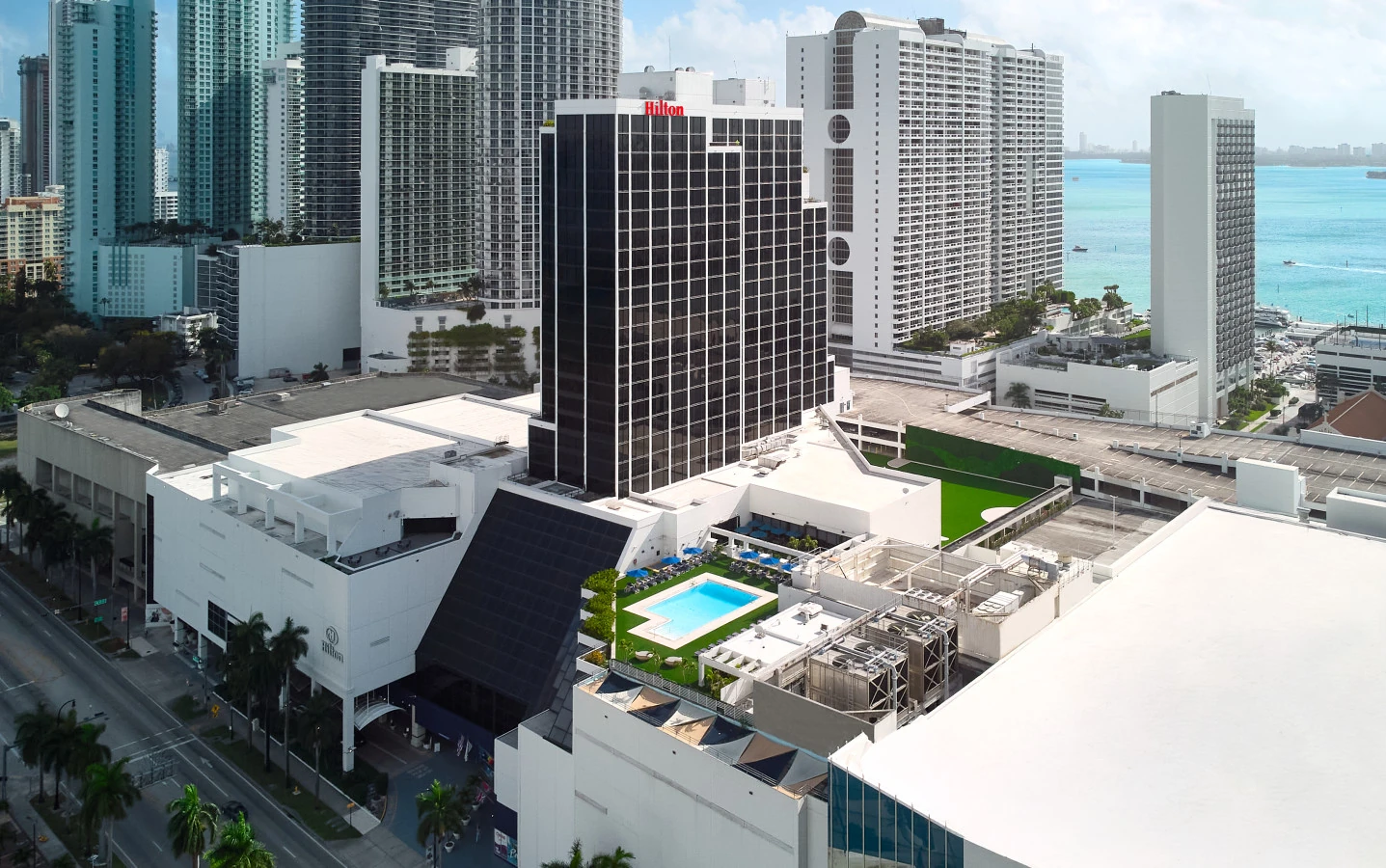
Key Operational Considerations for Hilton Miami Downtown Programs
Biscayne Bay views and their influence on attendee experience in the Arts & Entertainment District
Urban freight timing and routing along Biscayne Boulevard for timely setups and dismantle
Coordination protocols with exhibitor-appointed contractors under venue-specific parameters
Integration with the documented South Florida supplier categories for AV, catering, and transportation
District differentiation between downtown core events and Miami Beach or airport-west programs
Alignment with connected Miami-Dade and Broward convention flow for overflow and multi-venue activations
Neighborhood-specific logistics that respect downtown Miami traffic and delivery constraints
Strategic Location Within Miami's Downtown and Brickell Conference Cluster
The Hilton Miami Downtown anchors programs in the Downtown, Brickell, and Biscayne Bay Core cluster, a district defined by high-density corporate events, investor conferences, and sponsor activations that leverage the urban waterfront setting. This area supports meeting activity distinct from the primary Miami Beach Convention Center corridor or the airport-west belt that prioritizes freight access and trucking routes. Organizers benefit from the property's position at 1601 Biscayne Boulevard, which connects directly to the Arts & Entertainment District's walkable amenities and places the venue one mile from both the Kaseya Center and Bayside Marketplace.
Planning for this cluster requires understanding how downtown properties interface with larger regional assets. The Miami Beach Convention Center provides nearly 500,000 square feet of exhibit space and 84 breakout rooms within the broader ecosystem, while the Broward County Convention Center is set up as a 350,000 Square Foot overflow option with plans for campus expansion beyond 1.2 million square feet. The Hilton Miami Downtown serves as an effective hub for pre- and post-event activities, hospitality suites, and targeted product demonstrations that complement larger trade shows staged at these facilities.
District-level differentiation appears in the pace of urban operations versus resort or convention-center environments. Biscayne Bay views enhance reception and banquet functions, while proximity to Brickell and the Miami Design District allows smooth extension of conference programming into networking at nearby venues. Coordination resources stress early mapping of these connections to maintain efficient attendee movement and avoid bottlenecks common to downtown Miami traffic patterns.
Immediate access to Kaseya Center and Bayside Marketplace within one mile
Walking distance to dining, shopping, and entertainment in the Arts & Entertainment District
Integration point for corporate programs tied to Biscayne Bay urban core
Support for multi-day conference schedules that combine meetings with downtown exploration
Venue-Specific Services and Mixed Supplier Ecosystem
Event execution at the Hilton Miami Downtown follows venue-driven parameters rather than blanket market assumptions. Official South Florida planning materials position each property's event platform as the primary reference point, with the Hilton Miami Downtown operating as a conference hotel that draws on the broader supplier network cataloged by the Greater Miami Convention and Visitors Bureau. This directory separates providers into specialized categories including audio-visual and film services, caterers, destination management companies, transportation, and entertainment booking.
The mixed nature of the Miami meetings market means organizers must align with the specific show manual and hotel guidelines for each program. This approach avoids assumptions about labor or contractor access and instead focuses on documented supplier capabilities that support high-quality execution. For instance, transportation partners can facilitate attendee movement between the Hilton Miami Downtown and other core assets such as the James L. Knight Center or the Miami Convention Center, while AV providers ensure presentation standards meet downtown corporate expectations.
Coordination resources highlight the importance of early supplier mapping. By referencing the GMCVB's established categories, planners can assemble teams equipped for the unique demands of Biscayne Bay events, from waterfront-themed receptions to technology-forward product launches. This ecosystem breadth enables customization without implying direct control over any single element of the operation.
Successful integration depends on clear communication of event specifications to all parties, ensuring alignment with the hotel's meeting platform and the regional infrastructure that connects Miami-Dade and Broward counties as a single operating region for major conventions and incentive programs.
Logistics, Routing, and Freight Timing in the Urban Core
Downtown Miami's street grid and Biscayne Boulevard traffic introduce distinct logistical considerations for events at the Hilton Miami Downtown. Neighborhood routing must account for city delivery windows, pedestrian density near Bayside Marketplace, and the need for precise scheduling to maintain smooth exhibit installation and removal. These factors differ markedly from the dedicated loading docks and expansive marshalling areas found at the Miami Beach Convention Center or the airport-adjacent facilities that prioritize west-side freight access.
Exhibitor-appointed contractor coordination becomes central to maintaining timelines in this environment. Planners reference venue-specific instructions to sequence deliveries, manage temporary storage, and execute dismantle in alignment with urban constraints. The research bundle underscores that final field conditions always depend on the current event paperwork and hotel directives rather than generalized market practices.
Freight timing strategies often incorporate early-morning or off-peak movements to navigate the Arts & Entertainment District's activity levels. This planning layer connects to the wider South Florida ecosystem, where transportation suppliers listed in official directories can provide vehicles suited to downtown maneuvering. Such attention to operational detail helps prevent delays that could impact the attendee experience at a property defined by its Biscayne Bay vistas and central location.
Account for Biscayne Boulevard traffic patterns in delivery scheduling
Sequence installations to respect pedestrian flow near Bayside Marketplace
Align contractor activities with hotel-specific loading instructions
Utilize documented transportation partners for urban-core movements
Event Formats Optimized for Conference Hotel Settings
The Hilton Miami Downtown accommodates a range of corporate and exhibition formats that capitalize on its conference hotel infrastructure and waterfront positioning. Product launches, sponsor hospitality suites, and mid-sized meetings benefit from the property's ability to blend indoor function space with views that reinforce Miami's distinctive appeal. These programs frequently serve as extensions of larger trade shows held at the Miami Beach Convention Center's 60,000 Square Foot Grand Ballroom or the Miami Airport Convention Center's 29,000 Square Foot ballroom.
Reception and banquet configurations leverage the Arts & Entertainment District's energy, allowing smooth transitions between structured sessions and informal networking. Classroom and theater setups can be arranged to support educational components of industry conferences, while the hotel's proximity to Brickell enables supplemental programming at nearby corporate or cultural sites. Planning emphasizes matching event scale to the venue's documented strengths rather than assuming unlimited capacity.
Operational detail extends to attendee management, with resources directed toward clear wayfinding from arrival points to function areas. This includes coordination of transportation from airports or other cluster locations such as Wynwood, Midtown Miami, or the Miami Design District. The result is a cohesive experience that respects the venue's role within the connected regional market spanning Miami-Dade and Broward counties.
Coordination Best Practices for Organizers and Exhibitors
Effective programs at the Hilton Miami Downtown begin with comprehensive review of the property's event guidelines alongside the broader Miami meetings resources. Early engagement with listed suppliers ensures availability of specialized services while maintaining compliance with all venue directives. This preparation phase includes mapping exhibit footprints to available configurations and confirming freight routes that avoid peak downtown congestion.
Exhibitor-appointed contractor selection should prioritize partners familiar with urban-core logistics and the specific demands of Biscayne Bay properties. Documentation of all timelines, access protocols, and service requirements helps prevent misalignments that could affect program success. The mixed supplier ecosystem provides flexibility, allowing organizers to tailor AV, catering, and staffing solutions to the precise needs of each event.
Attention to post-event logistics completes the coordination cycle. Dismantle scheduling must align with hotel requirements and city traffic realities, ensuring efficient clearance of materials. Resources for this venue stress the value of contingency planning that accounts for South Florida's interconnected convention calendar, where spillover from major shows at the Broward County Convention Center or Fontainebleau properties may influence availability.
Throughout the process, maintaining a planning mindset grounded in verified operational data produces measurable improvements in execution. This approach treats the Hilton Miami Downtown as one carefully calibrated component within Miami's diverse venue portfolio rather than a standalone solution.
Review current venue manuals and show-specific documentation
Map all contractor activities against urban routing realities
Confirm supplier assignments from official GMCVB categories
Build contingency windows for downtown traffic variables
Integration with Regional Convention Assets
The Hilton Miami Downtown functions effectively as a supporting venue within South Florida's larger meetings infrastructure. Its downtown location allows convenient linkage to the Miami Beach Convention Center's 1.4 million square feet of total meeting space and the Coastal Convention Center at Fontainebleau Miami Beach. Programs can distribute activities across these assets, using the Hilton for executive sessions or hospitality while staging main exhibitions at facilities with dedicated exhibit halls.
Airport-west properties and Broward spillover venues further expand options for exhibitors requiring extensive freight handling. The research bundle positions Miami-Dade and Broward as a unified operating region, enabling planners to route materials efficiently between the Hilton Miami Downtown and facilities offering 100,000 square feet or more of exhibition space. This regional view supports incentive events, association conventions, and corporate gatherings that span multiple days and locations.
Successful integration depends on detailed timeline coordination and clear communication among all parties. Resources for the Hilton Miami Downtown therefore include guidance on synchronizing schedules with primary convention centers, managing attendee transfers, and aligning supplier services across district boundaries. The outcome is a cohesive regional strategy that maximizes the distinct advantages of each venue type.
Preparing for Long-Term Success in Downtown Miami Events
Sustained performance at the Hilton Miami Downtown and similar urban venues rests on consistent application of operational best practices developed through market-specific knowledge. Organizers who invest time in understanding Biscayne Bay district dynamics, supplier network capabilities, and venue-driven parameters position their programs for repeatable success. This includes ongoing monitoring of traffic patterns, refinement of contractor protocols, and maintenance of relationships within the documented supplier ecosystem.
Future planning can incorporate evolving regional capacity such as Broward County Convention Center expansions and continued growth in Miami's corporate event sector. The Hilton Miami Downtown remains a valuable option for programs that benefit from its central location, bay views, and proximity to key attractions. Coordination resources evolve alongside these market signals to deliver increasingly precise guidance for exhibitors and meeting professionals.
The emphasis remains on authoritative, fact-based planning that respects the individual character of each South Florida venue. By focusing on nuance rather than generalization, organizers achieve outcomes that reflect the sophistication of Miami's meetings industry while honoring the specific operational realities of the Arts & Entertainment District.
Monitor regional capacity developments across Miami-Dade and Broward
Refine logistics protocols based on accumulated downtown event data
Maintain alignment with official supplier directories and venue guidelines
Scale programs to leverage both hotel strengths and larger convention assets
Frequently Asked Questions About Planning Events at Hilton Miami Downtown
Q: What distinguishes event planning at the Hilton Miami Downtown from beachfront or airport venues?
The Hilton Miami Downtown operates within the Downtown, Brickell, and Biscayne Bay Core cluster, requiring attention to urban routing, Biscayne Boulevard freight timing, and integration with the Arts & Entertainment District's pedestrian and traffic patterns. This differs from the dedicated loading infrastructure at the Miami Beach Convention Center or the trucking advantages of west-side properties.
Q: How does the supplier ecosystem support programs at this conference hotel?
The Greater Miami Convention and Visitors Bureau maintains categorized listings for audio-visual services, caterers, destination management companies, transportation, and entertainment providers. These resources enable organizers to assemble teams that align with the Hilton Miami Downtown's venue-specific guidelines and the mixed labor environment of the South Florida market.
Q: What logistical factors should be prioritized for downtown Miami events?
Key factors include precise freight scheduling to avoid peak traffic, coordination with exhibitor-appointed contractors under current hotel directives, and clear mapping of routes from Biscayne Boulevard to function spaces. These elements ensure alignment with the documented operational parameters of the Arts & Entertainment District.
Q: Can the Hilton Miami Downtown support exhibitions tied to larger regional conventions?
Yes. The property serves effectively as a base for hospitality, breakout sessions, or smaller-scale exhibitions that complement major activity at the Miami Beach Convention Center, Miami Airport Convention Center, or Broward County Convention Center. Planning focuses on synchronized timing and attendee movement across the connected Miami-Dade and Broward markets.
Q: What role do Biscayne Bay views play in event design?
The views enhance reception, banquet, and networking functions by reinforcing Miami's waterfront identity. Planners incorporate these sightlines into layout decisions while ensuring that all technical and logistical elements remain coordinated with the hotel's meeting platform and district-specific constraints.
Q: How should organizers approach labor and contractor decisions for this venue?
Decisions must follow the specific show manual, hotel guidelines, and current event documentation. The market operates on a venue-driven, mixed model supported by the broad supplier ecosystem rather than uniform rules, making early reference to official resources essential for compliance and efficiency.